Online Account Opening Video KYC Software for Customer Onboarding
Suvajit Sengupta | 23rd January, 2024
4 min reads

Suvajit Sengupta | 23rd January, 2024 | 4 min reads
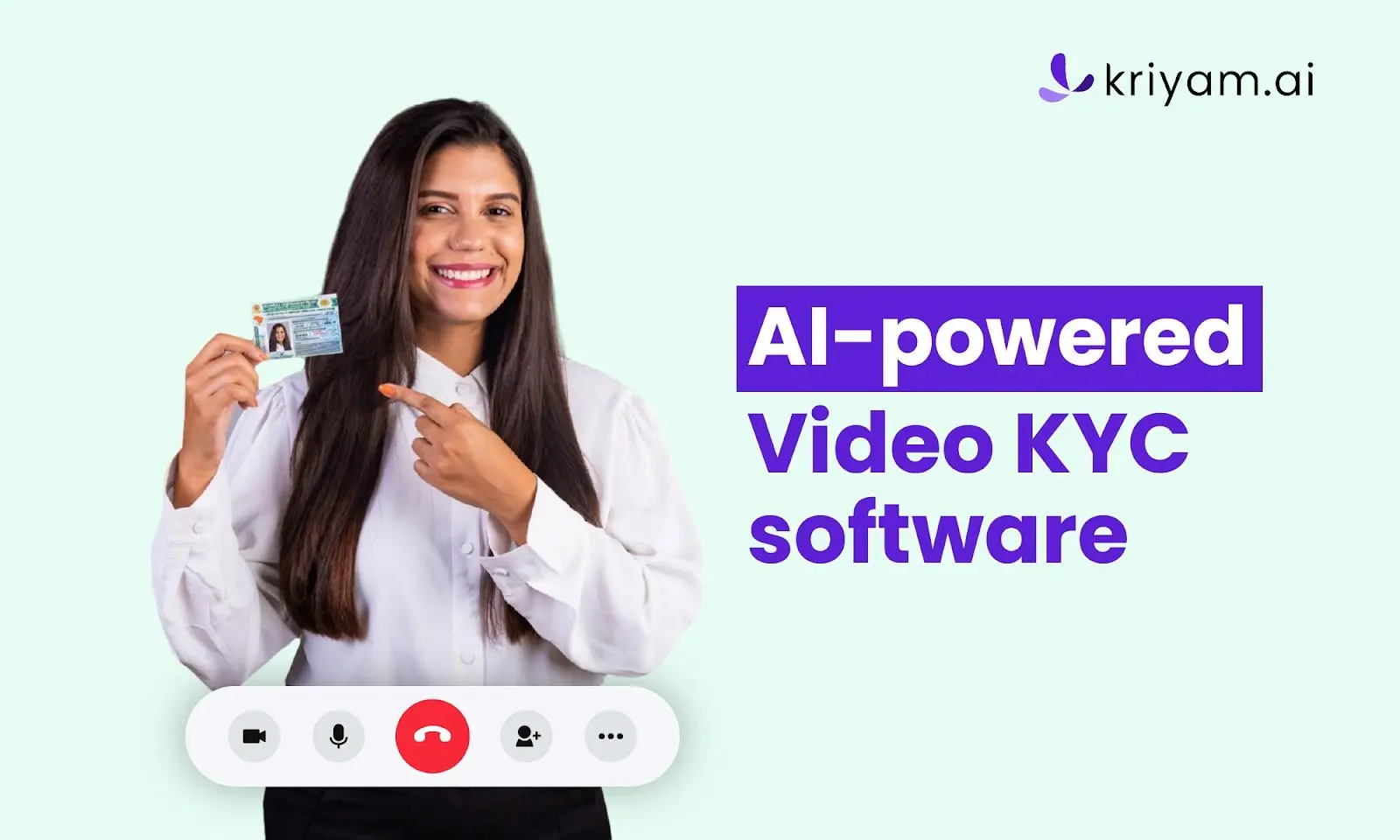
The financial sector is witnessing a transformative shift with the integration of Online Account Opening Video KYC (Know Your Customer) Software into customer onboarding processes.
This modern approach transcends traditional methods, introducing a streamlined, secure, and highly user-friendly platform for remote identity verification.
As financial institutions grapple with the challenges of ensuring security and compliance in an increasingly online world, Video KYC emerges as a key solution. This blog aims to explore the nuances of this technology, highlighting its significant impact on customer onboarding, its myriad benefits, and the way it is redefining industry standards.
We will delve into how Video KYC Software not only enhances customer experience but also aligns with regulatory demands, offering a comprehensive view of its role in the evolving landscape of financial services.
Let's get started!
Understanding AI-Powered Video KYC in Online Account Opening
AI-powered Video KYC (Know Your Customer) revolutionizes how financial institutions handle customer identification and verification, especially in online account opening. This technology blends video conferencing with artificial intelligence to streamline the KYC process. Here's a closer look at how it works.
Remote KYC Process via Video Call
- Customers can complete the KYC process remotely using a video call.
- AI enhances the efficiency and accuracy of this process, which is ideal for opening an online account.
AI greatly improves the online account opening procedure by increasing accuracy and efficiency. In the digital era, it speeds up and improves the reliability of the verification processes, which benefits businesses as well as customers.
Integration of Facial Recognition Technology
- During the video call, facial recognition compares the customer's live image with their photo ID.
- AI algorithms accurately confirm the identity, significantly reducing identity fraud risks.
Read more about Facial Recognition Technology
Use of Optical Character Recognition (OCR)
- OCR technology scans and extracts data from documents like driver's licenses or passports presented during the video call.
- It verifies the extracted information against the customer's provided details for consistency and accuracy.
Incorporating Biometric Verification
- Biometric methods such as voice recognition or fingerprint scanning are often used.
- These add an extra security layer, making it difficult for impostors to pass the verification process.
AI-powered Video KYC has a significant overall impact on the banking and financial industries. It provides a more safe, effective, and convenient onboarding process for starting an online account. By simplifying the verification procedure, this technique greatly improves security and integrity.
Advantages of AI-Powered Video KYC
1. Enhanced Fraud Prevention
- AI-powered Video KYC significantly boosts security measures crucial for fraud prevention.
- Advanced technologies like facial recognition and document verification accurately confirm the identity of customers, drastically reducing the chances of fraudulent activities.
2. Improved Compliance with Regulatory Requirements
Continue reading this article
You're just one step away. Complete the quick form below to
unlock this article — and explore the rest of our blogs.
About the author
Suvajit Sengupta
Co-founder & CTO
Suvajit Sengupta | Co-founder & CTO
A passionate technologist who thrives at the intersection of customer needs and innovation. With a track record of building adaptive product teams, he share insights on solving real-world problems with AI and scalable tech solutions.
Interests: AI products, Team Leadership, Data Strategy
Content Overview
Share
FEATURED



Insurance
5 Ways Agentic AI is Transforming Insurance Industry
This blog explores how pioneering insurers are leveraging Agentic AI to solve critical challenges—from eliminating claims backlogs to hyper-personalizing policies—while addressing ethical and operational hurdles.

Sreyan M Chowdhury
30th March, 2025